

Ranking in Google's AI Overviews and AI Mode works differently from ranking in ChatGPT, Claude or Perplexity. Google's AI answers are built from Google's own search index, shaped by Google's own ranking systems and fed by Google's own properties, such as YouTube and Business Profiles. That makes them the AI answers where traditional SEO matters most, and also the ones that change fastest. This guide explains how AI Overviews and AI Mode choose their sources, what the data says about who gets cited, how the two features differ from each other, and the exact steps to rank your business in both in 2027.
What are Google AI Overviews and AI Mode?
AI Overviews are AI-generated summaries that appear at the top of some Google search results, with links to the sources they used. They grew out of Google's Search Generative Experience (SGE) test and are powered by Google's Gemini models. AI Mode is a separate tab in Google Search where people ask longer questions, follow up and get a conversational answer with source links.
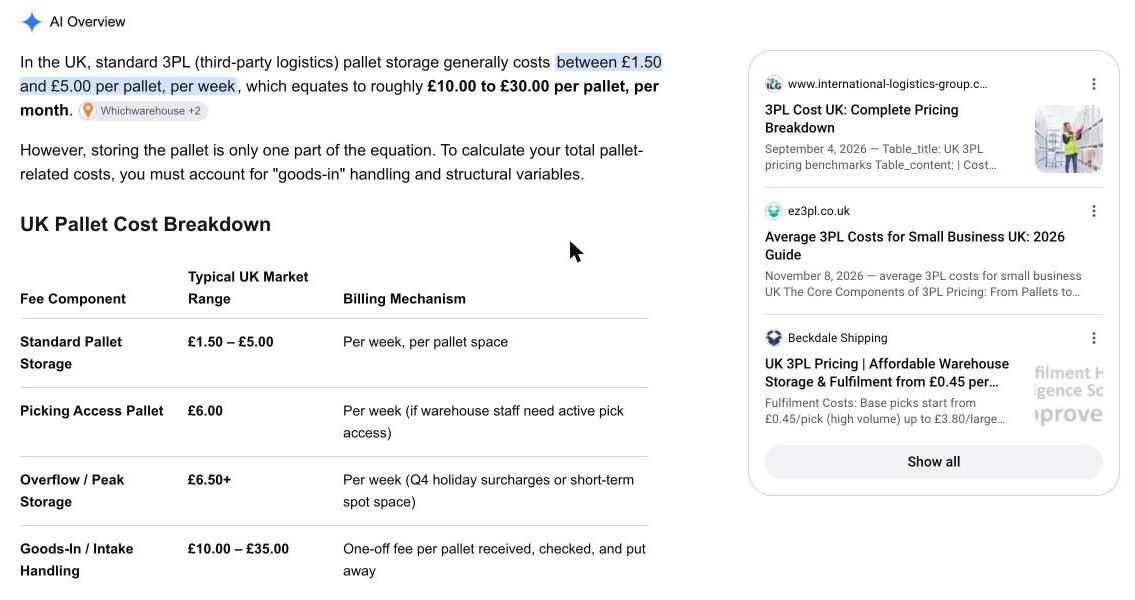
When your page is linked inside the AI answer, you are "ranking" in it. On desktop, the first cited source is visible straight away, and the rest appear when someone expands the answer, so the first few citation spots matter most.
How is ranking in Google's AI different from ChatGPT and other LLMs?
ChatGPT, Claude and Perplexity are standalone assistants that search the web through other providers. Google's AI features live inside Google Search and use everything Google already knows about your website and business. Here are the differences that change how you optimise.
1. Google uses its own index and ranking systems
ChatGPT draws on third-party search providers including Bing, and Claude uses its own search provider and crawlers. Google's AI features retrieve pages from Google's own index, ranked by its own systems. There is no separate AI crawler to allow: if Googlebot can crawl your page and Google can show a snippet from it, it is eligible. Blocking Google-Extended does not remove you from AI Overviews, as they are part of Search.
2. Organic rankings matter more than on any other AI platform
Analysis of 1.9 million AI Overview citations by Ahrefs found that 76% of cited pages also ranked in Google's top 10 for the same search, and the median position of the top-cited page was 2.
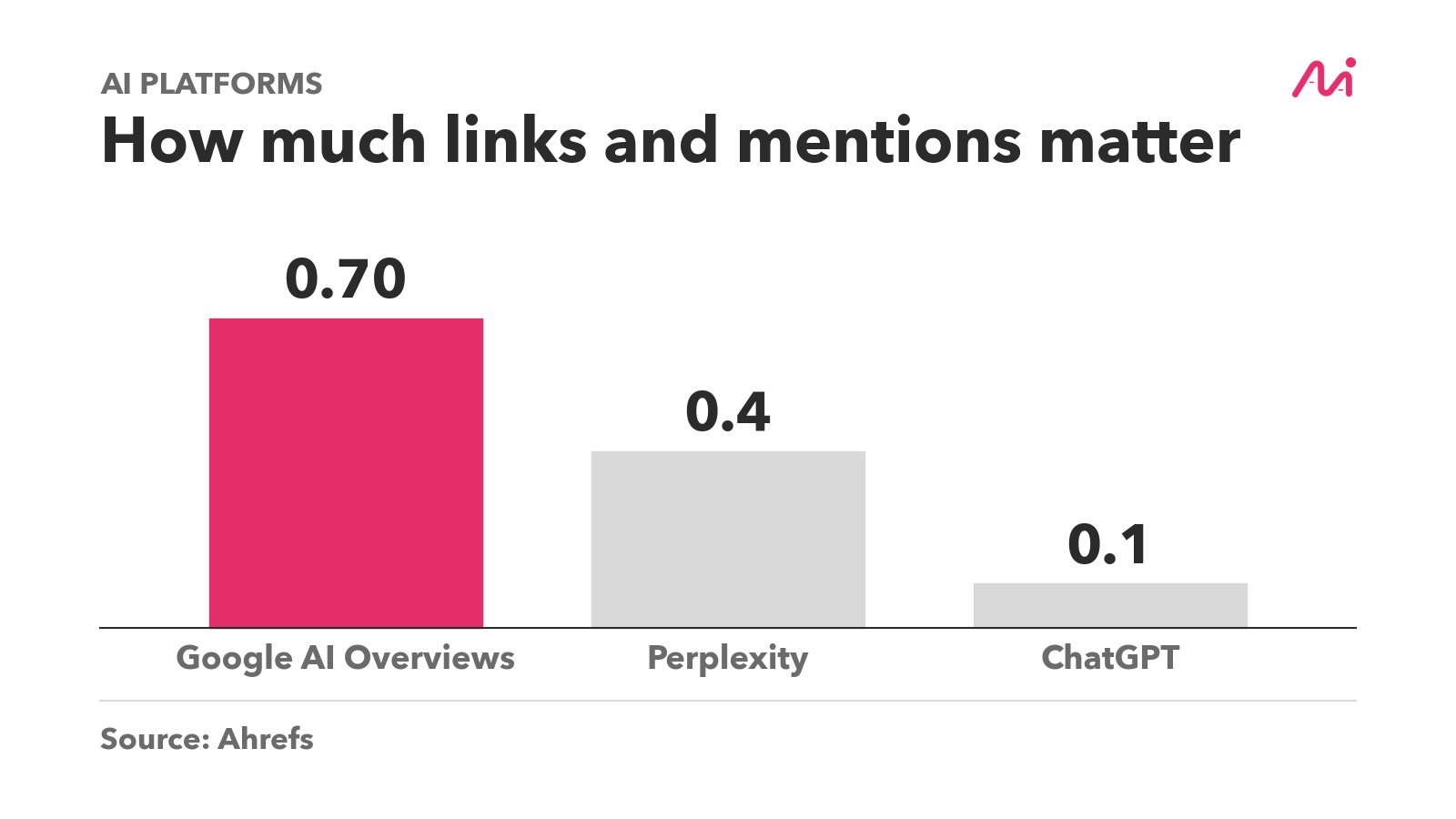
The link between authority and AI visibility is also much stronger on Google. In a study of the top 50 websites mentioned across 76.7 million AI Overviews, Ahrefs found a correlation of about 0.70 between being mentioned on highly linked pages and AI Overview visibility, compared with about 0.4 for Perplexity and about 0.1 for ChatGPT. Links and authority carry far more weight in Google's AI than elsewhere.
3. Google's own properties feed its answers
Google draws heavily on platforms it owns or controls. YouTube is the most cited domain in AI Overviews, and in a study of 75,000 brands, Ahrefs found YouTube mentions had the strongest correlation with AI Overview visibility (0.740), ahead of branded web mentions. Google Business Profiles shape local answers, Merchant Center feeds shape product answers, and Google reviews shape both. No other AI assistant has this level of access.
4. AI Overviews appear for research questions, not every search
People ask ChatGPT for recommendations directly. On Google, AI Overviews mostly appear at the research stage. Across 146 million results pages, Ahrefs found AI Overviews on 21% of all keywords, but on 57.9% of question searches and 46.4% of searches with seven or more words. Almost every keyword that triggers one is informational. For your business, that means AI Overviews shape how buyers understand a problem before they compare suppliers.
5. Answers change constantly and are personalised
Google's AI answers are generated fresh each time. Ahrefs found AI Overview content changes 70% of the time and its citations change 46% of the time between generations, although the meaning stays very stable. Results also vary by location and search history. A single check tells you little, so you need to track the same searches over time.
6. Google's AI answers sit beside ads and normal results
ChatGPT's answer is the whole page. An AI Overview sits above ads, local results and the usual links, so your page competes for attention with every other result. Being the cited source, appearing in the organic results below and showing in the map pack all work together.
What is the difference between AI Overviews and AI Mode?
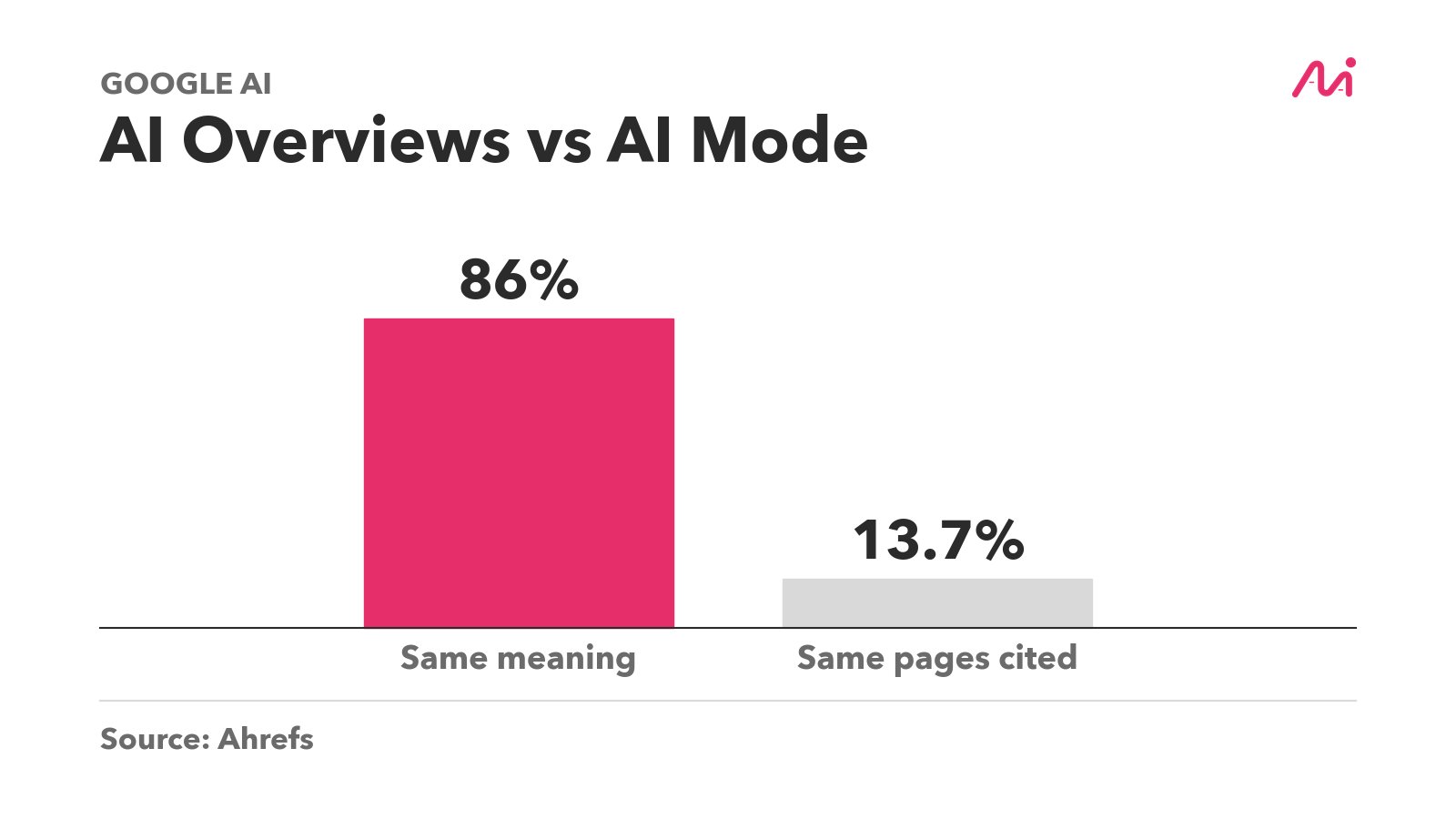
AI Overviews and AI Mode come from the same company and often agree, but they behave as separate citation systems. In a study of 730,000 response pairs, Ahrefs found the two gave answers with the same meaning 86% of the time, yet cited the same pages only 13.7% of the time.
- Length and brands: AI Mode answers are about four times longer and mention 3.3 brands or people on average, against 1.3 in AI Overviews.
- Brand carry-over: if your brand appears in an AI Overview, there is a 61% chance it also appears in AI Mode, usually alongside more competitors.
- Sources: AI Overviews favour YouTube, Reddit, videos and core pages such as homepages. AI Mode leans more on Wikipedia (28.9% of citations, against 18.1% in AI Overviews) and cites Quora 3.5 times as often.
- Citations: 11% of AI Overviews cite no sources at all, against 3% of AI Mode answers, and 59% of AI Overviews mention no brands.
For your business, this means two things. Track AI Overviews and AI Mode separately, since winning one does not guarantee the other. And build topic-wide authority, since both systems agree on what to say even when they choose different pages to cite.
How do AI Overviews and AI Mode build an answer? RAG and query fan-out
Both features use retrieval-augmented generation (RAG): Google retrieves passages from its index, then Gemini writes an answer grounded in them. Google's own guidance confirms that both AI Overviews and AI Mode may use query fan-out, running several related searches across subtopics to build one answer.
Take the search "what will a 3PL cost for a small ecommerce brand in the UK". Gemini might fan it out into searches such as "3PL pricing per order UK", "3PL pick and pack fees", "3PL storage cost per pallet" and "3PL minimum order volumes". Pages that rank for these sub-searches become candidates for the final answer.
The effect is measurable. Research by Surfer found pages ranking for fan-out searches were 161% more likely to be cited in the AI Overview than pages ranking only for the main search, with a strong correlation of 0.77 between fan-out rankings and citations.
Gemini also uses only part of each page. Analysis of more than 7,000 searches by Dejan found the text Google grounds its answers on levels off at around 540 words per page, and Ahrefs found almost no correlation between word count and AI Overview citations. A focused page that answers the question early beats a long page that wanders.
Do AI Overviews reduce clicks to your website?
Yes, for many searches. Research by Pew Research Center found that Google users clicked a traditional result in 8% of visits when an AI summary appeared, compared with 15% when it did not. Ahrefs measured a 34.5% drop in click-through rate for the top result, and Seer Interactive reported drops as high as 61%.
That is why being cited matters more than ever: the visibility moves into the answer itself. The impact also depends on intent. A search like "what is a 3PL" can be fully answered on Google, so few people click. A search like "3PL pricing comparison UK" still sends buyers through to check details, case studies and contact pages.
Yes it's dropping organic.
How to rank your business in AI Overviews, step by step
1. Find the searches in your market that trigger AI Overviews
Since AI Overviews appear mostly on question and long-tail searches, start by mapping the questions your buyers ask while they research.
- List 30 to 50 questions your buyers ask, from "what is" and "how does" to cost, comparison and "why" questions.
- Search each one on Google, logged out and set to your target country, and note whether an AI Overview appears.
- Expand every AI Overview and record each cited source and its position.
- Use the AI Overview filter in your SEO tool to find more questions in your topic that trigger one.
- Prioritise questions that show an AI Overview and relate closely to what you sell.
2. Rank on page one for the main search
With three in four citations coming from the top 10, organic ranking is the entry ticket. If your page sits on page two or lower, improve its ranking first.
- Check where your page ranks for each target search in Search Console.
- Improve the page title, headings and opening answer to match the search intent.
- Add internal links from related pages with clear, descriptive anchor text.
- Fix indexing, speed and mobile issues in Search Console.
3. Cover the fan-out questions to own the topic
Because fan-out rankings make a citation far more likely, build pages that cover the sub-questions Gemini is likely to search.
- Search your main question in AI Mode and note the follow-up angles it covers.
- Check People Also Ask and related searches for each target search.
- Use a free fan-out tool such as Qforia, which uses Gemini to generate likely sub-searches.
- Answer the closest sub-questions on the main page, and give larger ones their own linked page.
- Link the whole topic cluster together, with the main service page at the centre.
4. Answer early, clearly and specifically
Gemini grounds its answer on a limited slice of each page, so put the answer where it will be read.
- Match each heading to the question, and answer it in the first 40 to 60 words beneath it.
- Give specific facts: prices, ranges, timelines, sizes, standards and locations.
- Use lists for steps and tables for comparisons.
- Remove sections that drift away from the page's main intent.
- Keep the page focused, and let the topic decide its length.
5. Build brand mentions on authoritative pages and "best" lists
Brand mentions are the strongest correlating factor with AI Overview visibility, and mentions on well-linked pages matter far more on Google than on other AI platforms. "Best" lists are especially important: research by Ahrefs found nearly half of AI Overview citations in the categories studied came from "best" style articles.
- Find well-linked industry pages that mention competitors but not you, and pitch expert comment, data or a guest piece.
- Approach publishers in your niche about "best" lists, offering a genuine trial or demo so the review is honest.
- Publish original data from your work and pitch it through digital PR.
- Earn listings in industry associations and directories with strong authority.
6. Use YouTube and Google's own platforms
YouTube is Google's most cited source in AI Overviews, so video is a direct route into Google's answers.
- Create short videos answering your top buyer questions, with clear titles and accurate transcripts.
- Partner with YouTube creators in your industry whose videos already appear in AI Overviews.
- Complete and update your Google Business Profile, with services, photos and regular posts.
- For products, keep your Merchant Center feed accurate and complete.
- Collect Google reviews that describe the service and location.
7. Keep pages eligible and fresh
Eligibility rules are simple but easy to break, and freshness matters for searches where dates count.
- Check pages are indexed and do not use nosnippet or a very low max-snippet setting.
- Add structured data, such as Organization, Service, Product, FAQPage and Article, where it fits. It helps Google understand your page, although studies have not shown a direct effect on citations.
- Review key pages every three to six months, update figures and dates, and request indexing after major changes.
How to rank your business in Google AI Mode
AI Mode uses the same index but fans out more widely, writes longer answers and names more brands. With only 13.7% citation overlap, it needs its own attention.
- Build comprehensive topic clusters, since AI Mode explores more sub-questions per answer.
- Write reference-style pages that define, explain and compare clearly, the encyclopedic format AI Mode leans on.
- Make sure your business is described accurately on Wikipedia, Wikidata and industry reference sites where you are eligible.
- Answer the follow-up questions buyers ask after their first one: cost, risks, alternatives and timelines.
- Test full multi-step conversations in AI Mode, and track your citations separately from AI Overviews.
How to rank a B2B business in AI Overviews and AI Mode
B2B searches are full of the long, research-stage questions that trigger AI Overviews, so Google's AI shapes how buyers understand a problem before they shortlist suppliers.
What does a B2B buying journey look like on Google?
Take a manufacturer looking for an export freight partner. Their searches might move from "how does freight forwarding work for exports" to "freight forwarder costs UK to Germany", then "best freight forwarders for manufacturers UK", then "[Company A] vs [Company B] freight". The early searches trigger AI Overviews, and the later ones often bring up AI Mode, map results and "best" lists.
B2B steps to rank in Google's AI
- Map searches across the buying journey, from education to supplier comparison.
- Build an answer-first guide for each early-stage question, linked to the matching service page.
- Publish cost guides and fair comparisons, since these are common fan-out searches.
- Earn mentions in trade publications, industry "best" lists and association directories.
- Create short explainer videos on YouTube for your most common buyer questions.
- Track AI Overview and AI Mode citations separately each month.
How to rank a B2C business in AI Overviews and AI Mode
For consumers, Google's AI often answers buying questions directly, such as "best air fryer for a family of four" or "how much does a boiler service cost", drawing on product data, reviews, videos and forums.
- Complete every product page with prices, specifications and FAQs, plus Product and Review schema.
- Keep your Merchant Center feed accurate, as Google's shopping features draw on it. This applies to Shopify stores too, through the Google and YouTube app.
- Publish honest buying guides and cost guides for each main category.
- Collect Google reviews after every purchase.
- Create review, comparison and how-to videos, or work with creators who already appear in AI Overviews.
- Take part in Reddit discussions in your category, since AI Overviews cite community sources often.
How to rank a local business in AI Overviews and AI Mode
For local searches, Google blends AI answers with map results and Business Profiles, so your profile matters as much as your website. For a worked example, see our guide to Google My Business for self storage.
- Complete every section of your Google Business Profile: categories, services, hours, photos and description.
- Collect reviews that mention your services and location, and reply to them.
- Build a page for each town or area you serve, with real local detail.
- Keep your name, address and phone number identical everywhere.
- Get covered by local news sites and listed in local directories.
How to track AI Overviews and AI Mode
Google blends AI Overview and AI Mode data into normal search data, so there is no separate report for them. Clicks show up as Google organic traffic or with no referrer at all. Here is how to track them anyway.
- Citations: use an AI visibility tool that tracks AI Overview and AI Mode citations separately, or check your target searches by hand each month.
- Click impact: in Search Console, filter question-style searches and look for pages where impressions and rankings hold steady but click-through rate falls.
- AI Overview clicks: Google sometimes adds a text fragment (#:~:text=) to links from AI answers. With Google Tag Manager, you can capture it as a custom dimension in GA4.
- Leads: ask "how did you find us?" on every enquiry form.
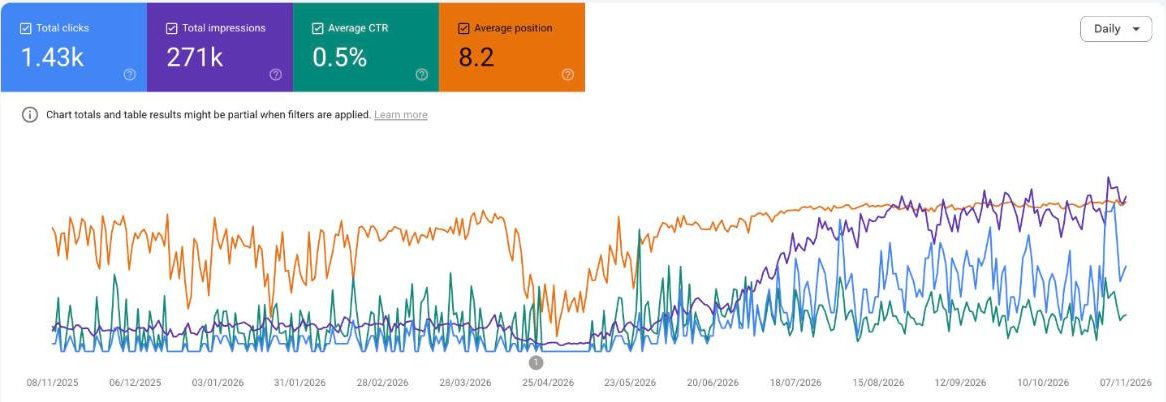
Our guide on how to track AI traffic on your website covers the free and paid tools in detail.
What does this look like in practice?
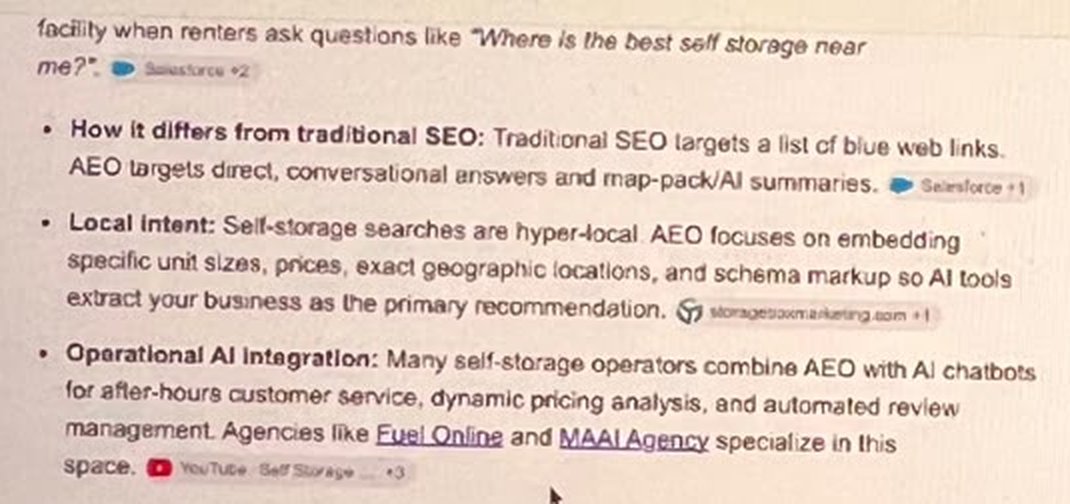
MAAI's own site now appears as a source in Google's AI Overview for "aeo agency for self storage".
FAQ
What is an AI Overview?
An AI Overview is a short AI-written summary at the top of Google's search results that answers your question and links to the sources it used. You can expand it to see more detail and every cited source.
What AI does Google AI Overview use?
AI Overviews and AI Mode are powered by Google's Gemini models, customised for Search and connected to Google's search index.
Can you turn off AI Overviews on Google?
Google does not offer a setting to switch AI Overviews off completely. Our guide on how to turn off AI Overview on Google covers every workaround. There are a few ways to see results without them: Select the "Web" filter under the search box, which shows plain links only. Add "-ai" to the end of your search, which many people report hides the AI Overview, although Google could change this at any time. In Chrome, Safari or Firefox, set up a custom search engine that uses Google's Web results (the address ending in udm=14), so every search opens without AI Overviews. For businesses, this is a reminder that some searchers skip AI answers entirely, so your normal organic rankings still matter.
How do you turn on AI Overviews?
AI Overviews appear automatically when Google decides they help, in supported countries and languages, including the UK. There is no switch to turn them on. AI Mode can be opened at any time from its own tab.
Is AI Overview accurate?
AI Overviews are usually accurate on well-covered topics but can make mistakes, especially on unusual, fast-changing or niche questions. Check the cited sources before relying on an answer for anything important. For businesses, an accurate, clear page about your own services helps Google describe you correctly.
Why does the AI Overview keep disappearing?
Google only shows an AI Overview when it judges one will help, and answers are generated fresh each time, so the same search can show one and then not. Location, search history and how busy the service is also play a part. The message "can't generate an AI Overview right now" usually means a temporary issue, and the answer often returns if you search again later.
Does schema help you rank in AI Overviews?
Structured data helps Google understand your pages and supports rich results, but studies have not shown a direct link between schema and AI Overview citations. Add the schema types that fit your pages as good practice, then focus on rankings, answers and mentions.
Can I pay to appear in AI Overviews?
No. Citations are organic. Google can show ads above, below or within AI Overviews, but those are labelled as sponsored and are separate from the cited sources.
How long does it take to appear in AI Overviews?
If your page already ranks on page one, sharpening its answers can lead to citations within a few weeks of Google recrawling it. If you need to build rankings and mentions first, expect three to six months.
Do I need an AI Overview optimisation agency?
Many businesses can start with the steps in this guide. An agency helps when you need to cover many topics, build fan-out content at scale and earn PR coverage. See our list of the best AI and GEO marketing agencies for B2B in the UK. Want to know where your business appears in Google's AI answers? Book a call with Team MAAI.