

Buyers no longer wait for a sales call to learn about you. Research by 6sense found that B2B buyers make first contact 61% of the way through their buying process, and Forrester reports that 94% of B2B buyers now use AI while they buy. By the time someone fills in your form, they have already searched Google, read AI answers in ChatGPT or Google's AI Mode, compared options and formed a shortlist. Yet many business owners still believe that "SEO brings traffic, ads bring leads". The truth is that SEO, AEO (answer engine optimisation) and GEO (generative engine optimisation) generate leads when they are built around how buyers research and decide, and AI-referred visitors already convert at higher rates than almost any other channel. This guide explains how SEO brings leads and sales, how it has changed with AI, how to reach buyers at every touch point in your industry, and how to measure the results.
How does SEO bring leads and generate sales for a business?
SEO brings leads by putting your business in front of people at the moment they search for what you sell. When your pages rank for the questions, comparisons and services buyers search, and those pages make the next step easy, visitors become enquiries without you paying for each click.
The mechanism is simple. Every search shows intent. Someone searching "office removals cost London" or "best property management software for landlords" is telling you what they need, often with a budget in mind. A page that answers that search well earns the visit, and a clear call to action turns the visit into a lead.
Businesses that commit to SEO see this play out. In a long-running r/SEO discussion, a former director of digital marketing at a B2B tech company acquired for $250 million said that Google "accounted for 99% of leads". Another business owner in the same thread ran only SEO for a year, with no ads, and still received leads every month.
How much do big and small businesses invest in SEO compared with PPC?
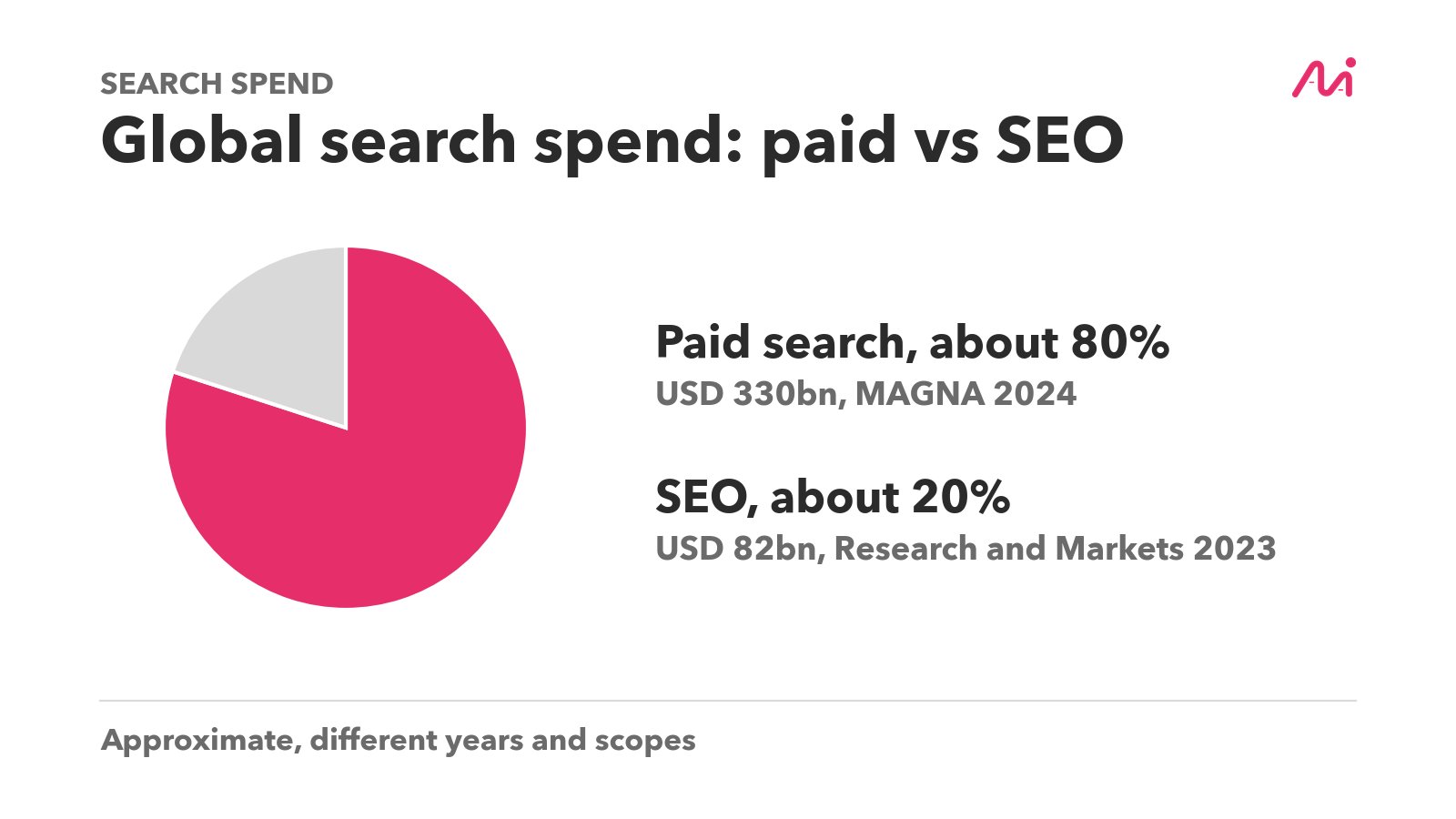
Spending tells an interesting story. Businesses still put far more money into paid search than SEO:
- Global spending on search ads reached $330 billion in 2024, according to MAGNA.
- The global SEO market was estimated at around $82 billion in 2023, according to Research and Markets.
Small businesses follow the same pattern. In a 2025 survey by CallRail, small and medium businesses named PPC (68%) as a top spending priority, ahead of SEO (40%). In LocaliQ's 2026 report, 53% of small businesses used SEO, behind unpaid social media and social ads. Yet a 2024 Service Direct survey found that 78% of US small business marketers used SEO and 75% used paid search, so most use both.
Large companies invest in SEO because organic search compounds. Paid search buys a click today; a strong page keeps bringing visitors and leads for years. Many smaller businesses lean on ads because results come faster and are easier to measure, which is exactly why SEO's lead value often goes unseen.
When can SEO generate leads on its own?
It depends on how aware your buyers are. One experienced contributor in the same Reddit thread framed it well: if buyers know their problem and know solutions exist, SEO alone can do it; if they are unaware of the problem, they "definitely" need other channels first.
- Problem and solution aware: buyers search for providers directly. SEO and GEO can carry most of your lead generation.
- Problem aware, solution unaware: buyers search for their problem. SEO works through educational content that introduces your solution.
- Unaware: buyers do not search yet. You need PR, social, partnerships or ads to create demand, and SEO to capture it later.
What does this look like for a real B2B business?
One of our clients sells high-value corporate relocation services to companies worldwide, a sale decided by a buying group rather than one person. We built answer-first, country-specific blog posts around the exact questions those buyers and the employees moving abroad ask, written to rank in Google and be quoted in AI answers. Organic traffic grew 81% from February to June, and 100% of the client's qualified leads in that period came directly through those country blog posts.
How has SEO evolved with AEO and GEO?
SEO used to mean ranking in a list of ten blue links. In 2027, a growing share of searches end with an AI-written answer, and both how people search and how answers are chosen have changed.
How has people's search behaviour changed?
- Longer questions: people now type or speak full questions, such as "which removals company in Leeds handles office moves over a weekend?", instead of "removals Leeds".
- Conversation instead of searching: buyers ask follow-up questions in ChatGPT, Claude or Google's AI Mode, refining their shortlist in one session.
- Answers without clicks: research by Pew Research Center found Google users clicked a traditional result in 8% of visits when an AI summary appeared, compared with 15% without one.
- Research spread across platforms: buyers check YouTube, Reddit, review sites and LinkedIn alongside Google and AI tools.
- Later contact: buyers reach out once they have already narrowed their options, so the shortlist is formed in search and AI answers.
How do AI tools choose which businesses to recommend?
When a buyer asks an AI tool a question, the tool usually searches the web first and writes its answer from what it finds, a method called retrieval-augmented generation (RAG). It also uses query fan-out, splitting one question into several smaller searches. "Best hotel for a corporate retreat near Edinburgh" might become searches for meeting room capacity, retreat packages, reviews and prices.
The tool then picks the passages that answer each part most clearly, and favours businesses that several trusted sources agree on. That is why ranking well, answering questions directly and being mentioned on other sites all feed AI visibility. In a study of 1.9 million citations, Ahrefs found 76% of pages cited in Google's AI Overviews already ranked in the top 10.
What do AEO and GEO add to SEO?
SEO earns you a place in the results. AEO and GEO earn you a place in the answer: being cited as a source and named as a recommended business. They rely on the same foundation, with extra focus on answer-first content, entity consistency and third-party mentions. Our guide to answer engine optimisation explains how it works in depth.
How to use AEO and GEO for your business
Every buyer moves through three stages, and the searches and AI prompts they use change at each one.
- TOFU (top of funnel): the buyer notices a problem and researches it. They need education.
- MOFU (middle of funnel): the buyer compares solutions and providers. They need comparisons, costs and proof.
- BOFU (bottom of funnel): the buyer is ready to choose. They need confidence and a clear next step.
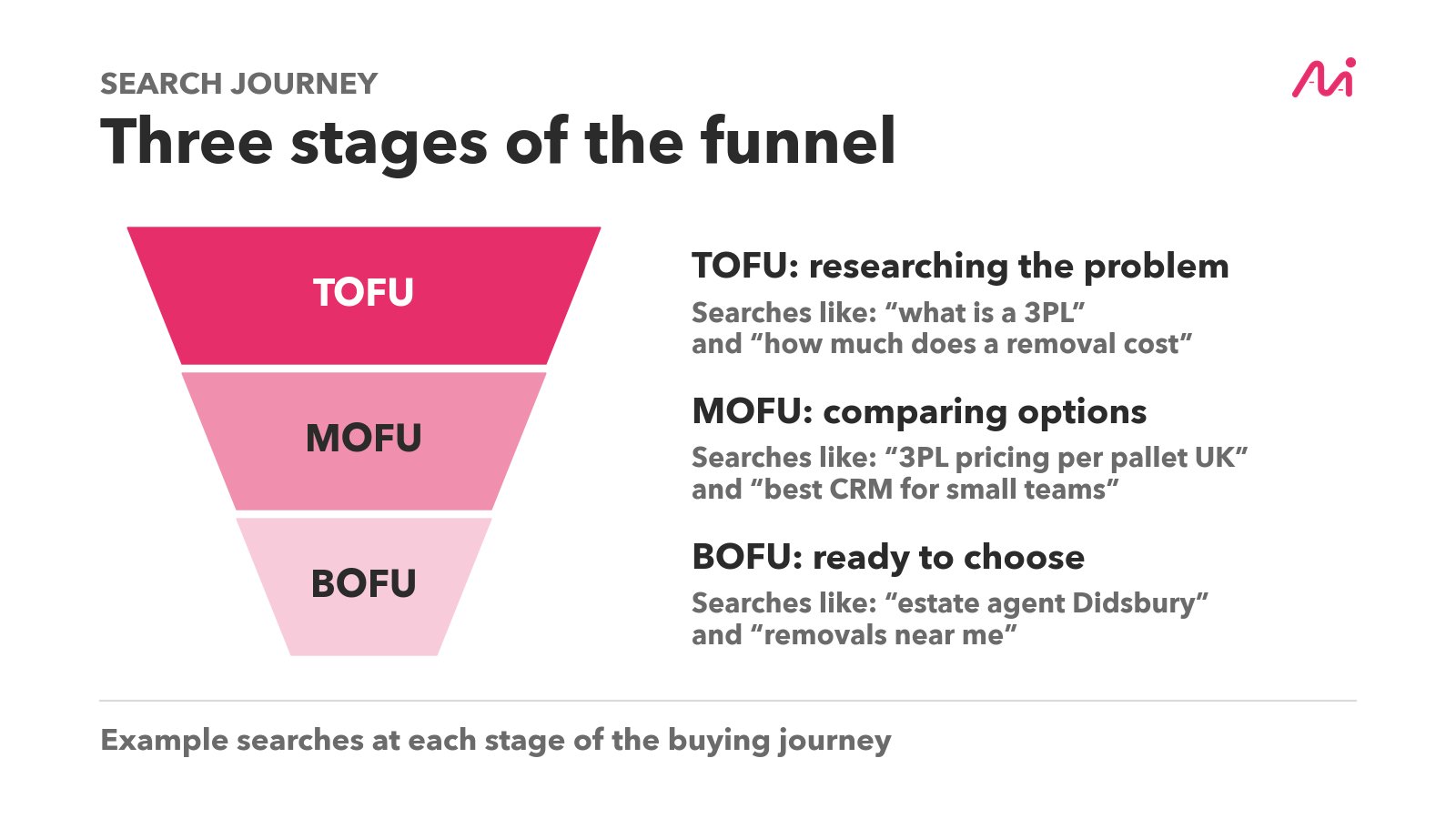
The touch points that matter most differ by industry. Here is how the journey looks in six common business types.
B2B services: logistics, consulting and professional services
B2B purchases involve a buying team and weeks or months of research. An operations manager, a finance lead and a director each ask different questions.
- TOFU: "how to cut warehouse costs", "what is a 3PL", asked on Google and ChatGPT.
- MOFU: "in-house vs outsourced logistics", "3PL pricing per pallet UK", plus peer opinions on LinkedIn and Reddit.
- BOFU: "3PL Midlands", "[company] reviews", "[company A] vs [company B]", plus case studies and the AI shortlist.
- Key touch points: AI shortlists, comparison pages, case studies, trade publications and LinkedIn.
Real estate and property
Property buyers, sellers and landlords research heavily, and portals play a big part.
- TOFU: "how much is my house worth", "best areas to buy in Manchester".
- MOFU: "estate agent fees UK", "online vs high street estate agent", local reviews.
- BOFU: "estate agent Didsbury", the Google Business Profile, reviews, and valuation request pages.
- Key touch points: local search and the map pack, area guides, reviews, portals and AI answers to "best agent in [area]".
Removals and local services
Local service buyers decide faster, and location matters most.
- TOFU: "moving house checklist", "how much does a removal cost".
- MOFU: "removal company vs man and van", "best removal companies [city]".
- BOFU: "removals near me", quote forms and phone calls.
- Key touch points: Google Business Profile, reviews, cost guides, location pages and "near me" AI answers.
Hospitality: hotels, venues and restaurants
Travellers and event planners now plan trips and events with AI tools, then book either directly or through online travel agencies (OTAs).
- TOFU: "things to do in the Lake District", "best places for a team retreat in Scotland", trip-planning prompts in ChatGPT.
- MOFU: "boutique hotels Edinburgh with meeting rooms", "wedding venues near Bath under £10,000", reviews and YouTube tours.
- BOFU: the hotel or venue name, "book [hotel] direct", availability and package pages.
- Key touch points: AI travel itineraries, Google Business Profile and Hotels listings, review sites, local guides, video tours and a direct booking page that beats OTA convenience.
For hospitality, every direct booking won through search avoids OTA commission, so SEO and GEO directly protect margin.
B2B SaaS and technology
Software buyers compare features, prices and alternatives in detail, often across review platforms.
- TOFU: "how to automate invoicing", "what is a CRM".
- MOFU: "best CRM for small teams", "[tool] alternatives", "[tool A] vs [tool B]".
- BOFU: pricing pages, review platforms such as G2 and Capterra, free trials and demos.
- Key touch points: "alternatives" and comparison pages, review platforms, AI shortlists, YouTube walkthroughs and pricing pages.
Ecommerce and D2C brands
Consumers often decide in one session, guided by reviews, video and AI shopping results.
- TOFU: "how to choose a running shoe", "best skincare routine for dry skin".
- MOFU: "best running shoes for flat feet under £120", reviews, Reddit threads and YouTube reviews.
- BOFU: product pages, Google Shopping, AI shopping results and offers.
- Key touch points: product pages with full details, reviews, buying guides, video and accurate product feeds.
How to use content to reach those customer touch points
Each content type does a specific job at a specific stage. Together, linked to each other, they form a structure that moves buyers from research to enquiry.
Pillar guides and cluster posts (TOFU)
A pillar is an in-depth guide on a broad topic. Cluster posts each answer one sub-question and link back to it. Together they build topic authority, which helps both rankings and AI citations, and they capture buyers early in their research.
Comparison, cost and "best" pages (MOFU)
Buyers comparing options search for costs, alternatives and "best" lists, and AI tools rely heavily on these pages when building shortlists. Clear, fair comparisons and honest price ranges win both the click and the citation.
Service, industry and location pages (BOFU)
These are your money pages: one page per service, per industry you serve and per location you cover. Each needs a direct answer to "what you do and for whom", proof, pricing guidance and a clear call to action.
Case studies and proof pages (BOFU)
Case studies, reviews and credentials settle the decision. Describe the problem, the work and the measured result, so both buyers and AI tools can repeat the facts.
Original data and research (all stages)
Data from your own work, such as average costs, timelines or survey results, is the content most likely to be quoted by journalists, linked by other sites and cited by AI tools.
Video (all stages)
Short explainers, tours, demos and customer stories serve every stage. YouTube is the most cited domain in Google's AI Overviews, so video is also a direct route into AI answers.
FAQs and answer-first sections (all stages)
Question-led headings with 40 to 60 word answers make every page easy for buyers to scan and for AI tools to quote.
Which channels should you use for your content?
- Your website: the home for every page above, and where every touch point leads back to.
- Google Business Profile: essential for local services, property and hospitality.
- YouTube: for explainers, tours, demos and reviews.
- LinkedIn: for B2B expertise, founder insights and case studies.
- Reddit and industry forums: for honest answers where buyers ask peers.
- Trade publications and digital PR: for authority, links and mentions.
- Review platforms: Google, Trustpilot, G2, TripAdvisor or the ones your industry uses.
- Email: to nurture buyers who are not ready yet.
Is writing and publishing on your website still relevant?
Yes. Your website remains the source that search engines and AI tools check, and the place every channel sends buyers to convert. But in 2027, publishing on your website is necessary and not enough on its own.
Where do AI tools pick up their information?
- Search indexes such as Google and Bing, which decide which pages are retrieved.
- Trusted websites, including publications, directories and industry associations.
- YouTube, Reddit and forums, for demonstrations and real opinions.
- Review sites, for reputation.
- Reference sources such as Wikipedia.
- Training data collected before each model was released.
Your website feeds the first of these directly. The rest depend on what other people and platforms say about you.
Why will authority content win?
AI tools can summarise generic content from anywhere, so generic content gives them no reason to cite you. Content with original data, first-hand experience, specific facts and clear answers gives them something worth quoting. Pages that already rank and are well linked are the ones retrieved first.
Why are backlinks and social media still important?
- Backlinks: links from respected sites still drive Google rankings, and Google's AI features draw from ranking pages. Mentions on well-linked pages correlate strongly with AI Overview visibility, according to Ahrefs.
- Brand mentions: even unlinked mentions help AI tools connect your business with a topic.
- Social: LinkedIn, YouTube and Reddit put your content in front of buyers directly, send referral traffic, and create the discussion AI tools pick up.
Do AEO and GEO leads convert better in 2027?
Yes. Visitors who arrive from AI answers convert at much higher rates than average, because the AI tool has already done part of the selling.
What does the data show?
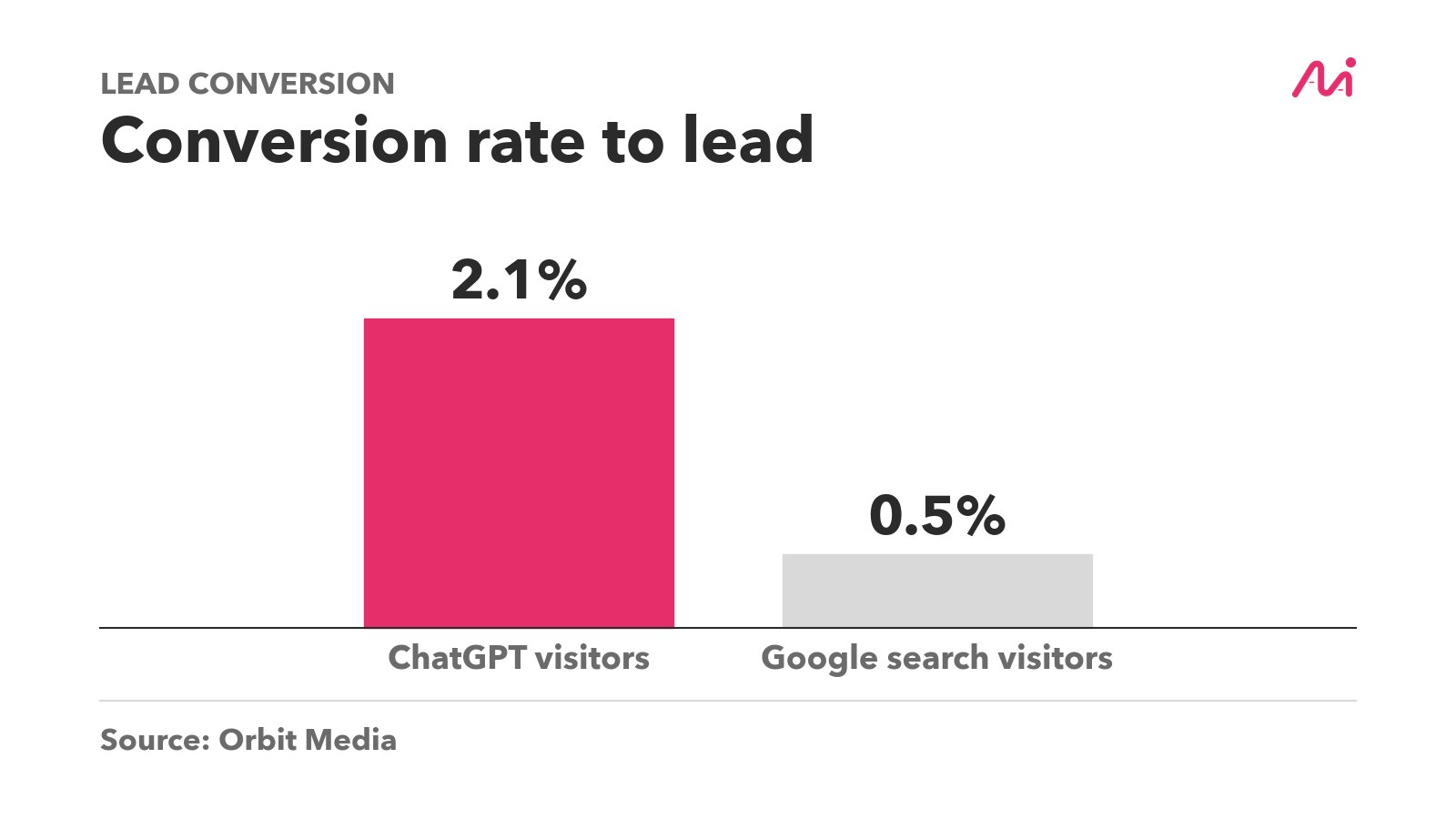
- Orbit Media analysed 97 B2B lead generation websites and 29 million visits. ChatGPT visitors converted to leads at 2.1%, compared with 0.5% for Google search.
- Ahrefs reported that AI search made up 0.5% of its visits but 12.1% of new signups.
- Semrush found AI search visitors converted 4.4 times better than traditional organic visitors.
Why are AI-referred buyers more likely to convert?
- Pre-qualified: the AI answer has already compared options and recommended you.
- Further along: buyers often click through only when they are ready to check details or get in touch.
- Higher trust: being named in an answer works like a recommendation.
Does Google search still matter more for volume?
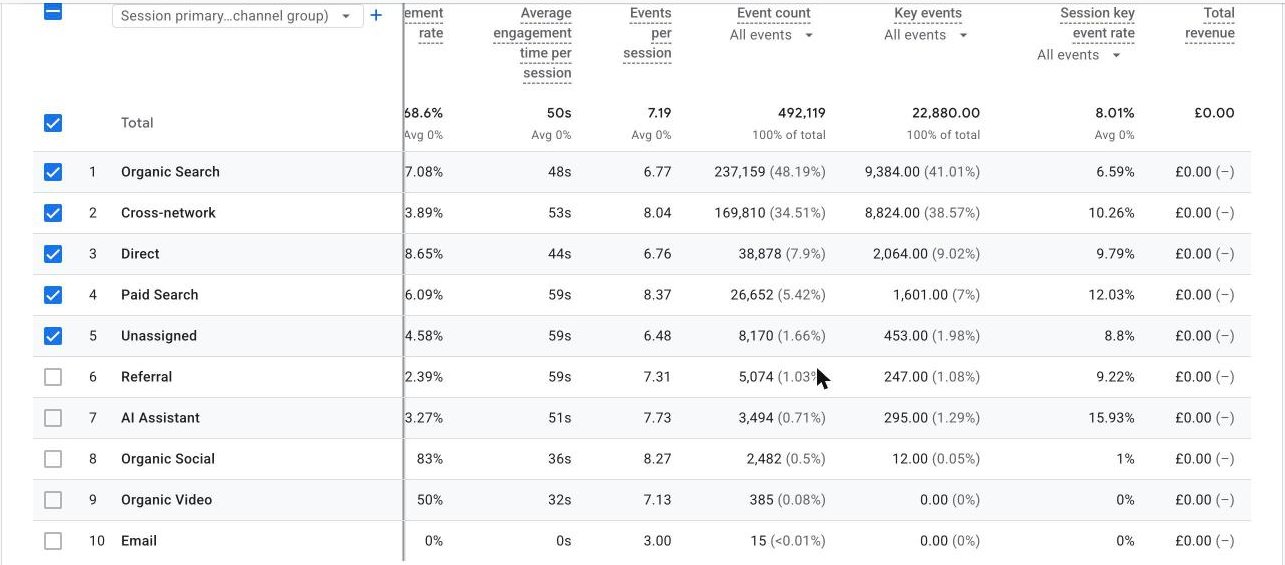
Yes. Orbit Media's data showed Google still sends far more traffic than AI tools, so organic search remains the largest source of leads overall. The strongest approach builds both: SEO for volume, AEO and GEO for high-intent visitors and shortlist inclusion.
How do you measure leads coming from SEO?
No single tool shows every SEO and GEO lead, so you combine five systems. Set up properly, together they show where leads come from, which pages create them and which become customers.
Google Analytics 4: visits, pages and enquiries
GA4 shows where visitors come from, which pages they land on and whether they enquire.
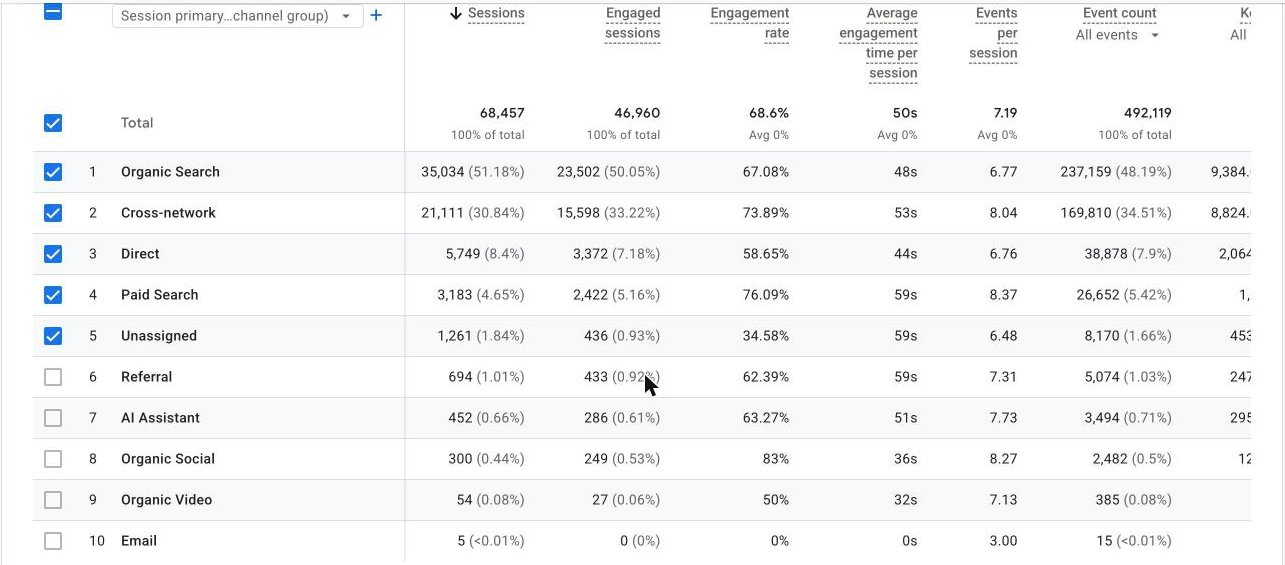
- Set up key events for every enquiry type: form submissions, bookings, phone clicks and email clicks.
- Create an "AI assistants" channel group so visits from ChatGPT, Claude, Perplexity, Gemini and Copilot get their own line, placed above Referral.
- Extend data retention to 14 months, filter out internal traffic and set up Consent Mode for UK and EU visitors.
- Use the Landing page report with key events to see which pages generate leads.
Our guide on how to track AI traffic for free walks through each setting step by step.
Google Search Console: searches, rankings and AI Overview impact
Search Console shows the searches you appear for, your rankings, clicks and click-through rate, including data from AI Overviews and AI Mode.
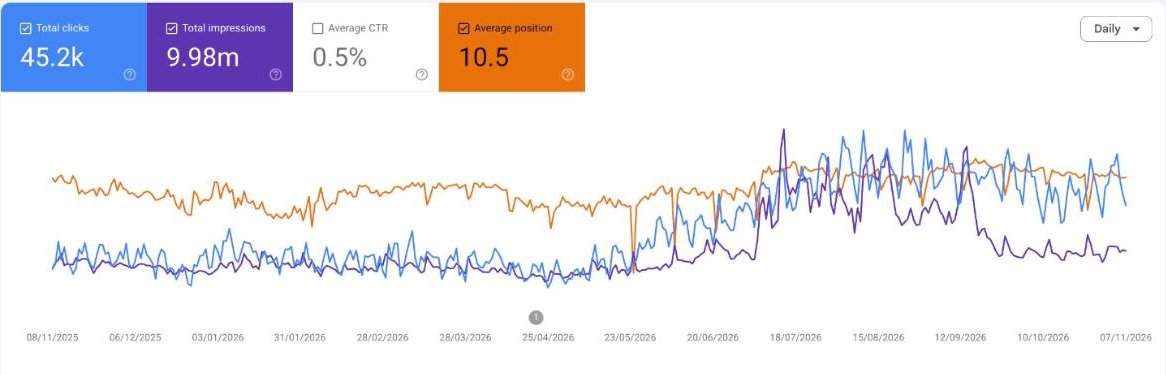
- Verify a Domain property, submit your sitemap and link it to GA4.
- Track BOFU searches (service, location, "near me", pricing) separately from TOFU searches.
- Watch branded searches, which grow as AI answers and content build awareness.
Your CRM: from lead to customer
A CRM such as HubSpot, Salesforce or Pipedrive connects each lead to the deal it becomes, which is how you prove revenue from SEO.
- Add hidden fields to your forms that capture the source, medium, landing page and first page visited.
- Store the original source on the contact record so it is never overwritten.
- Report on deals and revenue by original source, including organic search and AI assistants.
Call tracking: phone leads
For local services, property and hospitality, many leads call instead of filling in a form.
- Use a call tracking tool with dynamic number insertion, which shows a different number to visitors from each source.
- Connect it to GA4 and your CRM so calls count as leads with their source.
Self-reported attribution: what buyers tell you
Some influence leaves no data trail, such as a buyer who read an AI answer, then searched your name a week later.
- Add a required "How did you hear about us?" field, with options including "Google search", "ChatGPT or another AI tool" and "Recommendation".
- Ask the same question on discovery calls and record it in the CRM.
How do you bring it all together?
Build a monthly dashboard in Looker Studio with GA4 and Search Console data, and add CRM figures for deals and revenue. Track organic leads, AI leads, lead-to-customer rate and revenue by source, and compare each month with the same month last year.
How long does SEO take to generate leads?
Most businesses see early leads from SEO within three to six months, with steady growth over six to twelve months. The timeline depends on competition, your site's existing authority and how far buyers travel before deciding.
How does the timeline differ by business type?
- Local services and hospitality: often the fastest, around two to four months, when your Google Business Profile, reviews and location pages are strong.
- Real estate: around three to six months for local terms, longer for competitive city searches.
- B2B services: around four to nine months, as content builds authority and buying cycles run for weeks or months.
- SaaS and ecommerce: often six to twelve months in competitive markets, faster for niche products and long-tail searches.
AI answers can move faster. Once a page ranks and is indexed, AI tools that search live can start citing it within weeks.
How do you attribute leads across a long buying journey?
- First touch: the channel that first brought the buyer, which often credits SEO and GEO for starting the journey.
- Last touch: the channel just before the enquiry, which often credits ads, email or direct visits.
- Assisted conversions: GA4's attribution reports show channels that contributed earlier in the journey.
- Self-reported source: what the buyer says, which captures AI influence that analytics misses.
- Branded search growth: rising searches for your name signal growing awareness from content and AI answers.
Using several views together stops SEO's early influence from being credited to whichever channel happened to come last.
Why is PPC alone not enough?
PPC is useful for speed, launches, seasonal offers and testing new markets. On its own, it has limits that SEO and GEO fill.
- Leads stop when spending stops: paid traffic ends the day the budget does. Strong pages keep bringing leads month after month, so organic leads become recurring revenue.
- Costs keep rising: click prices rise as competition grows, while the cost of each organic lead tends to fall over time as content compounds.
- Brand is built through repeated visibility: appearing across Google results, AI answers, reviews and publications builds familiarity and trust, which shows up as branded searches and higher conversion on every channel, paid ones included.
- AI answers cannot be bought: being cited in ChatGPT, Claude or AI Overviews is earned through content, authority and mentions.
The strongest approach uses both: PPC for immediate demand and testing, SEO and GEO for compounding, lower-cost leads and a brand buyers already trust when they arrive. For B2B, our B2B SEO strategy guide shows the full buyer journey, and will AI replace SEO? covers where search is heading.
FAQ
Can SEO single-handedly get you leads?
Yes, when buyers already search for what you offer and you can wait for results to build. Many B2B and local businesses get most of their leads from organic search. If buyers are unaware of the problem you solve, you need other channels to create demand first.
Which channels support SEO best?
Digital PR, LinkedIn, YouTube, Reddit, review platforms and email all support SEO. They create mentions and links, send referral traffic and nurture buyers who find you through search.
How do you manage an SEO budget efficiently?
Start with BOFU pages closest to revenue, such as service, location and comparison pages, then build supporting content around them. Track leads and revenue, not just rankings, and move budget towards the pages and topics that produce enquiries.
Do you need to be an authority to rank?
You need some authority, which comes from links, mentions and helpful content, but you do not need to be the biggest name. Specialist businesses often rank well for specific, niche searches.
Does site speed matter for a small website?
Speed matters for user experience and conversions at any size. For a new site with little traffic, content, relevance and links usually matter more for rankings than small speed gains.
Does SEO lead generation depend on your niche?
Yes. Competition, search volume and buyer awareness vary by niche. Competitive markets take longer; niche and local markets often show leads sooner.
Should you add ads alongside SEO?
Often, yes, especially while SEO builds. Ads bring immediate leads and show which keywords convert, and SEO then targets those keywords for long-term, lower-cost leads.
Can ChatGPT generate leads for a business?
ChatGPT can send leads when it recommends your business and links to your site. AI-referred visitors often convert at higher rates than average. See our guide on how to rank your business in ChatGPT.
What is the 80/20 rule in SEO?
It suggests that around 20% of your pages or keywords produce around 80% of your results. Find those pages, usually service, comparison and location pages, and prioritise improving them.
Is lead generation legal in the UK?
Yes. Lead generation is legal, but collecting and using personal data must follow UK GDPR and, for marketing emails, calls and texts, the Privacy and Electronic Communications Regulations (PECR). Be clear about how you use data and get consent where required. Want to know how many leads SEO and GEO could bring your business? Book a call with Team MAAI.